Furrowed but Free...
Some psalms whisper their way in; others walk straight up and grab you. Psalm 129 is the second kind. It opens with a body language that everyone in this room will recognise — the language of the survivor.
“They have greatly oppressed me from my youth” (
Ps 129:1) is not abstract theology. It's a testimony. And by the time the psalm is finished, it has taken us from open wounds to open-handed prayer for the very people who caused them.
‘Furrows That Run Deep’…
David's opening cry — repeated twice for emphasis, almost like a scar being traced with a finger — isn't poetic exaggeration. It's Israel's actual story. From the oppression of the Moabites, Canaanites and Midianites in the book of Judges, to the Amalekites picking off the weak and weary stragglers as Israel fled Egypt, God's people have rarely known a season without an enemy at the gate.
Verse 3 gives us the psalm's most arresting image:
“Plowmen have plowed my back and made their furrows long” (
Ps 129:3). Derek Kidner notes that this picture,
'turns David's very body into a field that has been torn open, row after row.'*1 It's suffering with a shape to it — deliberate, sustained, cruel.
We shouldn't be surprised that we feel this too. We have a real enemy who targets us precisely because we bear God's image and have been made new in Christ. Add to that the ordinary furrows of a fallen world — illness, chronic pain, depression, anxiety — and the deeper furrow of grieving over evil the way God himself grieves over it, and it's clear this psalm was never meant to stay in the Old Testament. This isn't meant to make us fearful, though. Paul's picture of the armour of God (
Eph 6:10-18) exists precisely because we're told the ground we stand on, and the one who stands beside us.
‘The Lord Is Righteous’…
And then, mid-furrow, David says something almost startling in its simplicity:
“But the Lord is righteous” (
Ps 129:4). No lengthy argument. No demand for an explanation. Just an anchor thrown down.
Two things are worth noticing here. First, David turns to God, and nowhere else. Only God can actually heal our minds and our wounds. Hosea paints a haunting picture of Israel wailing on their beds over their troubles while still bowing to idols of wood, stone and gold (
Hos 7:14) — all noise, no healing, because they kept looking everywhere except up. Pleasure, power, money, distraction — these promise relief and deliver a deeper furrow. So does the voice that tells us our guilt or shame disqualifies us from turning to God at all. That voice is not God's; it's the enemy's oldest trick.
Jesus offers something entirely different — a yoke that is “easy” and a burden that is “light” (
Matt 11:29-30), not the crushing weight of guilt and shame the enemy loves to load onto us.
Second, David affirms a truth he already knows to be true. Every time Israel cried out during the dark cycles of Judges, God sent a deliverer — Gideon, Samson, and others — because that is who he is. Scripture exists precisely so that we can remind ourselves of the same evidence. God has not changed, and neither has his character, which is exactly why this ancient psalm still has something to say to a congregation in the twenty-first century.
‘He Has Cut the Ropes’…
Verse 4 finishes with the phrase that gives this whole psalm its hinge: God
“has cut me free from the cords of the wicked”. For Israel, that meant literal freedom from literal oppressors. But the ropes we're most bound by aren't usually held by other people.
The greatest rope-cutting in history happened on a Friday outside Jerusalem. Jesus's death frees us not just from external enemies but from our own sinful flesh and from the desires the enemy uses to snare us. We are made new, in-dwelt by the Holy Spirit, and given real power to flee temptation — even while we still feel its pull.
That same Spirit convicts us of the sin we can't always see in ourselves, which is why every believer, without exception, is still in the fight against something. But because Jesus has already stepped on the serpent's head (
Gen 3:15), the enemy holds no ultimate power over God's children. We resist him, but we need not fear him.
‘A Weight Not Worth Comparing’…
Paul puts this suffering into perspective in Romans 8:
“I consider that our present sufferings are not worth comparing with the glory that will be revealed in us” (
Rom 8:18). That's not denial — it's a positive posture. The Spirit lifts believers above their circumstances so that suffering, while real, doesn't get the final word or the same crushing weight it once had.
We see this in the book of Acts, where the apostles were flogged for preaching Christ and walked away from the beating rejoicing that they'd been counted worthy to suffer for his name (
Acts 5:41). That's not bravado; that's the fruit of knowing your ropes have already been cut. Like Israel, we will be attacked — but Scripture's promise is that we will never ultimately be defeated, because we belong to Christ and hold the truth of Christ.
‘Justice Without Hatred’…
The psalm's ending is the part most modern readers may flinch at. David prays that those who hate Zion would be
“turned back in shame” and wither
“like grass on the roof” (
Ps 129:5-6) — grass with such shallow roots it never even makes it to harvest. It's not wrong to pray for justice, for evil to be stopped, and for wicked intentions to fail. God himself hates injustice.
But there's a crucial difference between longing for justice and hating people. We are never given permission to hate those who don't yet know Christ — because every one of us was once in exactly that position, hostile to God ourselves (
Rom 5:10). Jesus is characteristically direct here:
“Love your enemies and pray for those who persecute you” (
Matt 5:44).
‘Marks on His Back’…
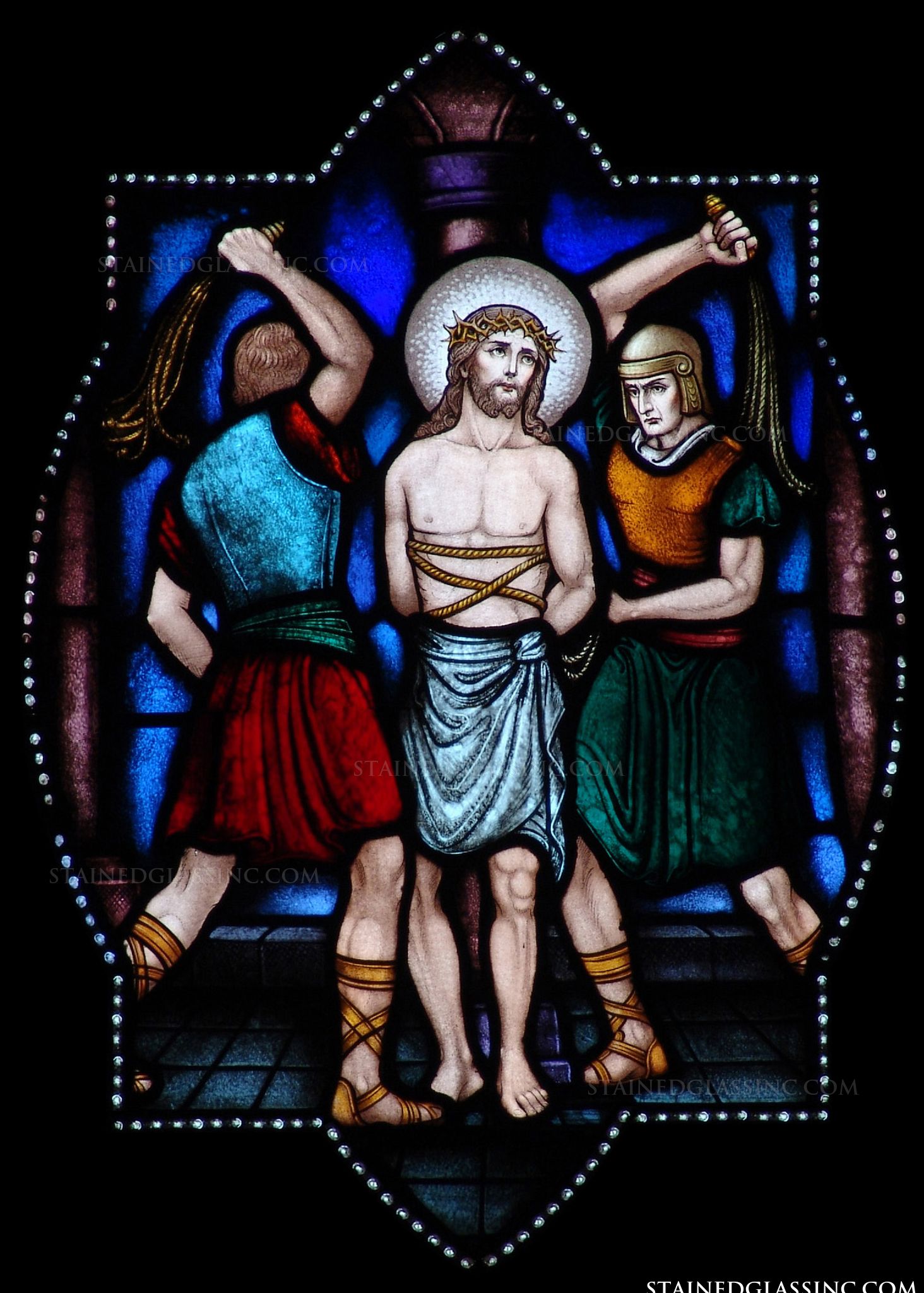
Here the psalm quietly points beyond itself to the cross. Christ bore marks on his own back — furrows not unlike the ones David describes — for people who hated him. Corrie ten Boom, who survived a Nazi concentration camp, is remembered for later shaking the hand of one of her former guards and choosing forgiveness over the hatred she had every right to feel.
“Even as the angry vengeful thoughts boiled through me, I saw the sin of them. Jesus Christ had died for this man; was I going to ask for more? Lord Jesus, I prayed, forgive me and help me to forgive him....Jesus, I cannot forgive him. Give me your forgiveness....And so I discovered that it is not on our forgiveness any more than on our goodness that the world's healing hinges, but on His. When He tells us to love our enemies, He gives along with the command, the love itself.” *2
Corrie ten Boom
That's the psalm's ending lived out in real history: justice can still be desired, even prayed for, while hatred is laid down at the foot of the cross.
Paul tells Timothy that God
“wants all people to be saved” (
1 Tim 2:4) — so those who have received his love are the very people best placed to pray for those still enslaved to addiction, sorrow, pain or despair, missing out on something genuinely glorious.
And when guilt and shame make it hard for us to come to God ourselves, remember: he is not looking for a flawless sacrifice, but a broken and contrite heart (
Ps 51:17).
Questions...
-
According to Psalm 129:1-3, how does the psalmist describe the suffering he has endured?
What is significant about the image of “furrows” ploughed into his back?
-
Read Psalm 129:4 again — what two things does David do in response to his suffering, and why does the order matter?
-
We contrasted turning to God with turning to “pleasure, power, money or the world” when we suffer.
What are some modern-day idols we might be tempted to turn to instead of God?
-
Psalm 129 moves from personal pain to a prayer for justice, without moving into hatred.
Why do you think this distinction — praying for justice while refusing to hate — matters so much for how Christians engage with those who oppose them?
-
Is there someone in your life you find it hard to pray for rather than resent?
What would it look like this week to bring both your hurt and that person honestly to God?
Footnotes:
1 – Kidner, D. (1975) Psalms 73–150: An Introduction and Commentary. Leicester: IVP, p. 449.
2 – ten Boom, C. (1971) The Hiding Place. Washington Depot, CT: Chosen Books.
Linked Sermon:
Click the icon below to view the sermon.