Work, Rest & Play…
We are spending the summer of ’26 on a journey through the Psalms of Ascent. To help us orientate ourselves at the outset of this tour, I took some time at the beginning of the first sermon to outline the occasion, scope, theme and purpose of the 15 Psalms – these ‘Pilgrim Psalms’ were compiled for the Jewish faithful as they travelled to Jerusalem to celebrate the annual feast days. Today, as we read through them, we are moved from trouble, in to trust and on to triumph.
Seeking Sufficiency!…
It seems that life has become an anxious occupation for many people. I am regularly having conversations with people who feel that they are overwhelmed in one way or another; each one plagued by a nagging sense of anxiety. How can we live as faithful witnesses in an overwhelming world?
Let’s see what
Psalm 127 can teach us.
‘“Faithful living integrates diligent work with radical trust,
transforming anxiety into purposeful action grounded in God’s sufficiency.”’ *1
It’s exhausting and deeply demoralising, to go through life utterly convinced that despite your best efforts you will never be sufficient – believe me I know that feeling all too well!

In the 2021 film ‘Encanto’, Mirabel comes to realise that she is never going to measure up to the exacting standards of Abuela, the family matriarch. In time we learn that Abuela has experienced great tragedy; and in her determined efforts to rebuild her life, her heart has grown calloused and cold.
I’ve met Christians like this – you might have too.
Sooner or later, life will reveal that we are insufficient beings. That’s why we need to find a sufficiency that is outside of ourselves – then we can truly rest.
‘Rest ≠ No Work’…
In a society that idolises Rest & Recreation, we must also avoid falling into the trap of complacency or laziness. When reflecting on Psalm 62:8, Charles Spurgeon wrote words to this effect in his devotional – ‘Morning & Evening’:
" We are not to be idle — that would show we trust not in God, who is at work even now, but in the devil, who is the father of laziness. We are not to be careless or reckless either — that would mean trusting to luck rather than to the living God, who is a God of order and good management. Acting always with wisdom and integrity, we are to rely completely and wholeheartedly on the Lord at all times." *2
The gospel simultaneously frees us from the struggle of constantly trying to be enough (Eph 2:8) whilst calling us to join with God in the work of living ‘gospel-shaped’ lives (Phil 2:12-13, Col 1:10) – it’s good news!!
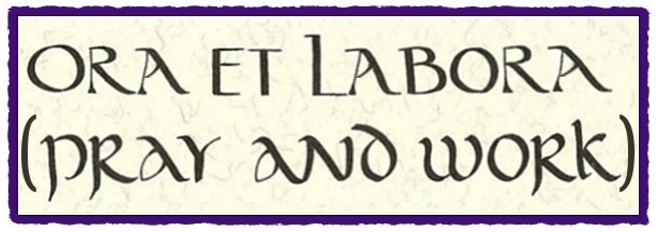
Having received the finished work of Christ, Jesus-followers work with God in a posture of trust and rest, we work ‘
from grace, not for grace’.
‘Unless the Lord’…
In Psalm 127:1 we begin with an emphatic declaration of God’s sovereignty and sufficiency;
“Unless the Lord…builds the house…watches over the city”
Imagine being there as this Psalm being sung by the faithful on the journey to Jerusalem; there the beauty of the temple, and the security of the watch towers await them. They might have had all kinds of reasons for making the pilgrimage, but the words of this song called them to acknowledge that God is over and above it all. I need that reminder too – all too often in life, if I’m not careful, a seemingly infinite number of things have crowded in and threaten to obstruct my view of God.

In verse 2, Solomon wants us to understand that trying to get ahead by burning the candle at both ends doesn’t achieve anything…why?
“…for he provides for his beloved,
even when they sleep.” *3
This rendering of the verse gives the fuller sense that God provides for us… even while we sleep! God isn’t half-heartedly listening to our evening prayers, drumming his divine fingers, impatiently waiting for the snoring because He wants to catch up on the new ‘Beyond Paradise’ episode on iPlayer
– He actually cares for you & me!
In the final three verses we are drawn into a family soap opera.
Children are born - a family is established - disputes are settled. (Ps. 127:3-5)
All these blessings flow from God’s gracious provision – and should be acknowledged as coming from His hand.
The final verse calls to mind the city gates, where the community elders would meet to settle civil matters, land quarrels, criminal actions and relational disputes. I can imagine that appearing at the gates on your own could well be an anxious or fearful prospect. At times like that you need people to stand with you, which is why Solomon emphasises the blessings of children. It’s also why God regards those who care for orphans and widows. (
Isa 1:17; Jas 1:27)
As we look towards the city gates, not of Jerusalem but of the heavenly kingdom, it may be that we begin to fear passing through the place of judgement – Who will stand with us? Who will plead on our behalf?
There is one who came from the heavenly city, Jesus suffered and died 'outside Jerusalem'. He lives eternally, to intercede for us and advocate on our behalf. We can enter in with confidence, knowing that our sufficiency comes from God.
(
Heb 13:12; 7:25; 1 Jn 2:1; Heb 10:19; 2 Cor 3:4-5)
‘The All-Sufficient One’…
True security and rest come not from our striving, guarding, or worrying, but from trusting the God who builds, watches, provides, and stands with his people — the all-sufficient Lord who says, “You rest; I’ve got this.”
Questions...
-
According to Psalm 127:1-2, who does the building, watching, and providing? What does this tell us about where our sufficiency comes from?
-
In the quote from Charles Spurgeon he warns against both laziness and reckless self-reliance. Read Psalm 127:1-2 again - how does trusting God's sufficiency look different from simply doing nothing?
-
The blog talks about children, family, and the city gates in verses 3-5 as examples of God's blessing and provision. Why do you think Solomon uses these everyday, ordinary pictures to teach us about trusting God?
-
Having thought about feeling like you'll "never be sufficient" no matter how hard you try. Where in your own life do you find yourself striving anxiously instead of resting in God's sufficiency?
-
"You rest; I've got this." What would it look like this week for you to work hard at something while still trusting God with the outcome, rather than anxiously striving for it?
Footnotes:
*1 – A summary of the Psalms of Ascent – Logos Study Assistant (2026)
*2 – ‘Morning and evening: Daily readings’. – Spurgeon, C.H. (1896) Passmore & Alabaster.
*3 – Psalm 127:2b - The Complete Jewish Bible - 2017
Linked Sermon:
Click the icon below to view the sermon.